


The Backbone of Your Floor: Understanding Laminate Backing Types
When you walk into a Flooring 101 showroom in Oxnard or Santa Maria, the first thing you’ll notice is the stunning “wear layer” of our laminate collections—the beautiful wood-look finishes and textures. But as flooring experts with 50 years of history, we always tell our customers: “The beauty is on the top, but the quality is on the bottom.”
The backing of a laminate plank is its foundation. It determines how the floor sounds when you walk on it, how it handles the humidity of the Ventura coast, and how long it stays flat and stable.
In 2026, backing technology has advanced significantly, and choosing the right type is essential for a successful installation.
The Primary Role of the Backing Layer
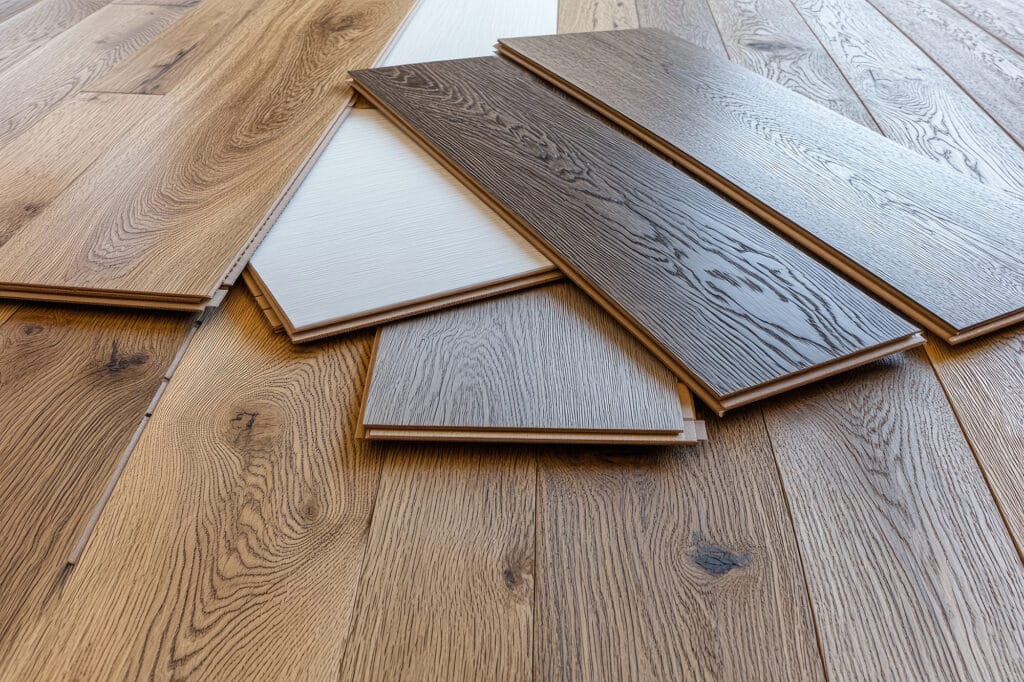
The backing layer, also known as the “balancing layer,” is located at the very bottom of the laminate sandwich. Its primary job is to provide structural stability. Because the top layers of laminate are under tension, the bottom layer must provide a counter-balance to prevent the plank from “cupping” or “bowing.”
-
Moisture Resistance: In coastal areas like Santa Barbara and Goleta, the backing acts as a first line of defense against subfloor moisture that could otherwise seep into the core.
-
Sound Insulation: A high-quality backing can reduce the “hollow” sound often associated with older laminate floors.
The Three Main Types of Backing/Underlayment
Integrated Cork Backing:
This is often considered the “premium” choice. Cork is a natural, sustainable material that is exceptionally good at thermal insulation and sound dampening.
It is naturally resistant to mold and mildew, making it a favorite for Bakersfield homes where temperature regulation is key.
Attached Foam/EVA Backing:
Many of our high-performance laminates come with a pre-attached foam or Ethylene-vinyl acetate (EVA) backing. This simplifies installation and ensures that every plank has a built-in “cushion.”
This type of backing is excellent for smoothing out minor imperfections in your subfloor.
Unattached (Separate) Underlayment:
Some traditional laminates require a separate underlayment to be rolled out across the subfloor first.
While this requires an extra step, it allows for specialized solutions—such as high-grade vapor barriers—which are often necessary for installations over concrete slabs in Simi Valley or Thousand Oaks.
Why “Rigid” Backing is Trending in 2026
In 2026, we are seeing a shift toward “Rigid Core” laminates. These utilize a highly compressed backing that makes the floor feel more like real hardwood or stone. It reduces the “bounce” in the floor and provides a more solid, “expensive” feel underfoot.
FAQ: Laminate Backing
Q: Do I still need a vapor barrier if my laminate has a backing?
A: If you are installing over concrete, we almost always recommend an additional 6-mil poly vapor barrier to protect your investment from “slab sweat.”
Q: Does a thicker backing mean a better floor?
A: Not necessarily. The density of the backing is more important than the thickness. A thin, high-density cork backing will often outperform a thick, low-quality foam.
Glossary of Backing Terms
-
Vapor Barrier: A thin plastic film used to prevent moisture from reaching the floor.
-
STC Rating (Sound Transmission Class): A measure of how well the floor stops sound from traveling to the room below.
-
Balancing Layer: Another term for the backing that keeps the plank from warping.
Foundations That Last
At Flooring 101, we don’t just sell you a floor; we sell you a foundation. Understanding the technical side of backing types ensures that your new laminate isn’t just beautiful on the day of installation, but stays stable and quiet for the next 25 years.
Want to hear the difference for yourself? Visit our Ventura or Thousand Oaks showrooms and ask for a “sound test” between different laminate backing types. We’re here to help you make the right choice!