



Wide or Narrow Planks? Hardwood Dimension Trends in Southern California Design
In the world of Southern California interior design, the width of your hardwood planks is just as important as the color or the species. Whether you are renovating a mid-century modern home in Thousand Oaks or a coastal cottage in Goleta, the dimensions of your flooring will dictate the visual “rhythm” of the entire house. Historically, narrow planks were the standard, but the modern era has seen a massive surge in the popularity of wide-plank flooring. At Flooring 101, we see these trends shifting daily across our showrooms, and we understand that the “right” choice depends entirely on the architecture of your home and the atmosphere you wish to create. Choosing between a 2-inch strip and a 9-inch wide plank isn’t just a matter of fashion; it is a strategic decision that can make a room feel more expansive or more intimate.
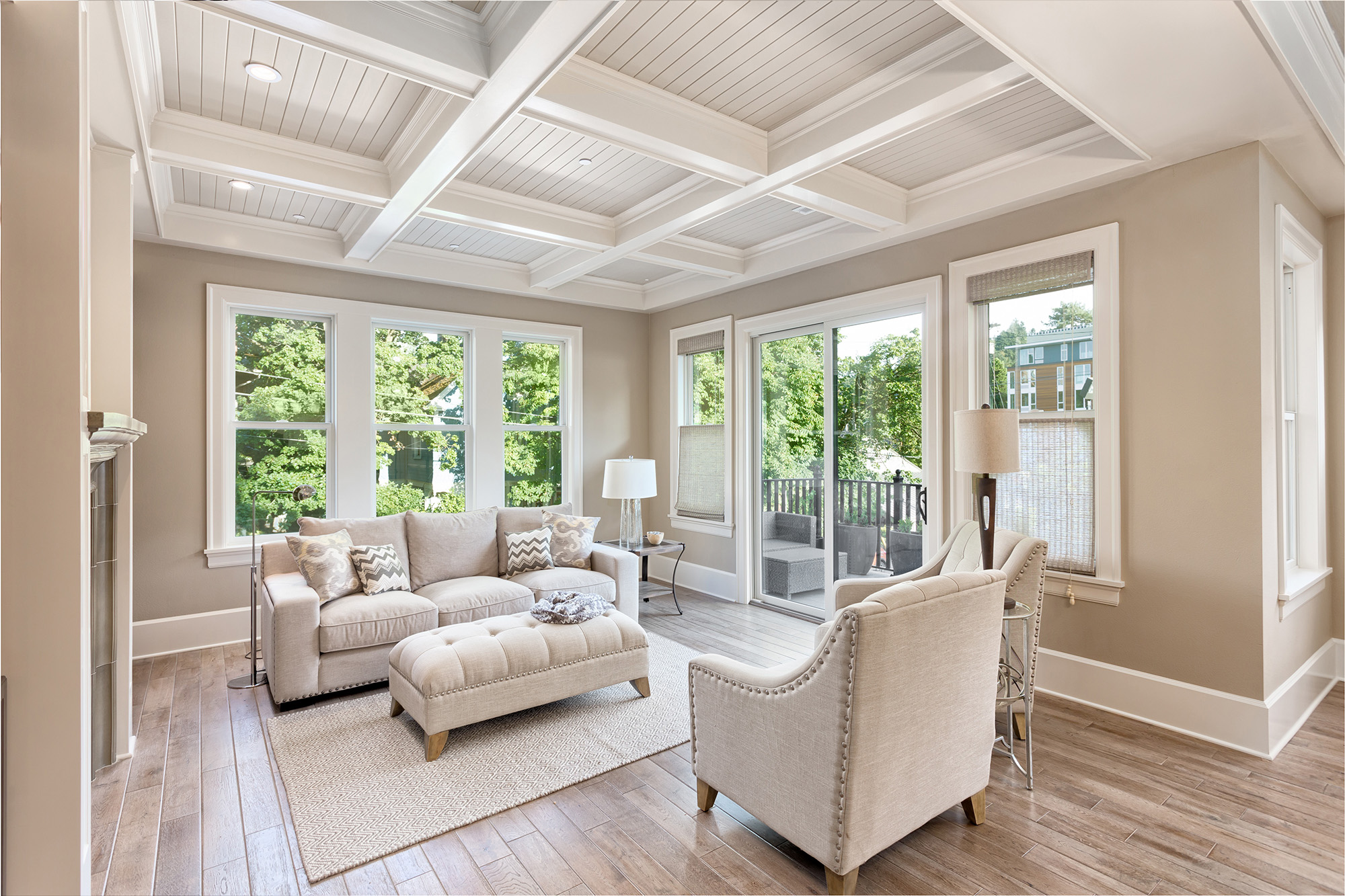
The Modern Allure of Wide-Plank Flooring
Wide-plank hardwood, typically defined as boards wider than 5 inches, has become the hallmark of the modern, open-concept Southern California home. By using fewer boards to cover the same surface area, you create fewer seams and a less “busy” visual field. This is particularly effective in large, sun-lit rooms in Santa Maria or Ventura, where the expansive wood grain can be fully appreciated. Wide planks allow the natural character of the wood such as knots, mineral streaks, and cathedral grain patterns to take center stage. This results in a floor that feels more “organic” and high-end. In a large room, wide planks simplify the space, drawing the eye across the floor and making the room appear even larger and more unified than it actually is.
The Classic Appeal of Narrow Planks
While wide planks are trending, narrow planks (often called strips) offer a timeless, linear elegance that shouldn’t be overlooked. Narrow planks, usually between 2 and 3 inches wide, create a more formal and traditional feel. They are often used in historic homes or smaller spaces where the scale of a wide wood plank might feel overwhelming. Narrow planks also offer superior dimensional stability; because each board is smaller, it has less mass to expand or contract, making it a rugged choice for various environments. For a classic Craftsman or a formal colonial-style home in the Oxnard area, narrow planks provide a sense of architectural continuity that wide planks simply cannot replicate. They are also ideal for creating patterns like herringbone or chevron, which add a layer of sophisticated artistry to the floor.
Matching Dimensions to Your Home’s Architecture
Deciding on the right plank size involves looking at the “volume” of your rooms. If you have 10-foot ceilings and an open floor plan, wide planks are almost always the superior choice to fill the visual void. However, if you are working with a more traditional layout with separate rooms and standard ceilings, a medium-width plank (around 4 to 5 inches) or a narrow strip can help the space feel more proportional. At Flooring 101, we often suggest “mixing” widths in some applications to achieve a rustic, custom-built look. Our design consultants in our various California locations are experts at analyzing your blueprints or existing space to help you find the dimension that complements your home’s unique soul, ensuring a balanced and beautiful result.
Visual Perception and the Wide-Plank Stability
The choice between wide and narrow planks in Southern California is often dictated by the “visual noise” a homeowner is willing to accept. In a sun-drenched Ventura beach house, wide planks serve to simplify the landscape of the room; with fewer seams, the eye perceives a more continuous, fluid surface that mimics the horizon. This reduction in “interruption” is why designers in Goleta and Santa Maria frequently specify planks of 7 inches or wider for minimalist and “Soft Modern” interiors. Conversely, narrow planks create a rhythmic, structured appearance that can help ground a room with very high ceilings by adding detail and texture to the floor level. It is a game of balance: wide planks for a sense of calm and expansion, and narrow planks for a sense of heritage and geometric precision.
Beyond aesthetics, there is a significant structural evolution that has made wide planks viable for the California climate. In the past, wide solid wood planks were prone to extreme cupping because a wider surface area naturally absorbs more ambient moisture. However, the wide-plank trend in Thousand Oaks has been fueled by advancements in engineered wood cores. By using a multi-ply or “lumber core” base, manufacturers can now produce 9-inch or even 12-inch wide planks that remain perfectly flat despite the humidity fluctuations of the Santa Barbara coastline. At Flooring 101, we ensure that our wide-plank selections feature a thick “wear layer” of authentic timber atop these stable cores, giving you the grand look of an old-growth forest floor with the modern engineering required to withstand our unique coastal-to-desert environmental shifts.
Shape Your Hardwood Plank Dimensions
The geometry of your floor defines the flow of your life, and we are dedicated to helping you find the perfect proportions that reflect your personal style and the spirit of your community. From the sweeping vistas of wide planks to the focused precision of narrow strips, Flooring 101 carries the largest inventory in the region to suit any architectural dream. Contact or Visit us at our showroom locations in Oxnard, Ventura, Bakersfield, Goleta, Thousand Oaks, Santa Maria, and Simi Valley, CA. We provide free in-home measurements and estimates, professional installation, and advanced cleaning and maintenance services to make the experience of buying and enjoying your new floors a pleasure. Flooring 101 has been providing flooring services to Ventura and Santa Barbara Counties for over 50 years.